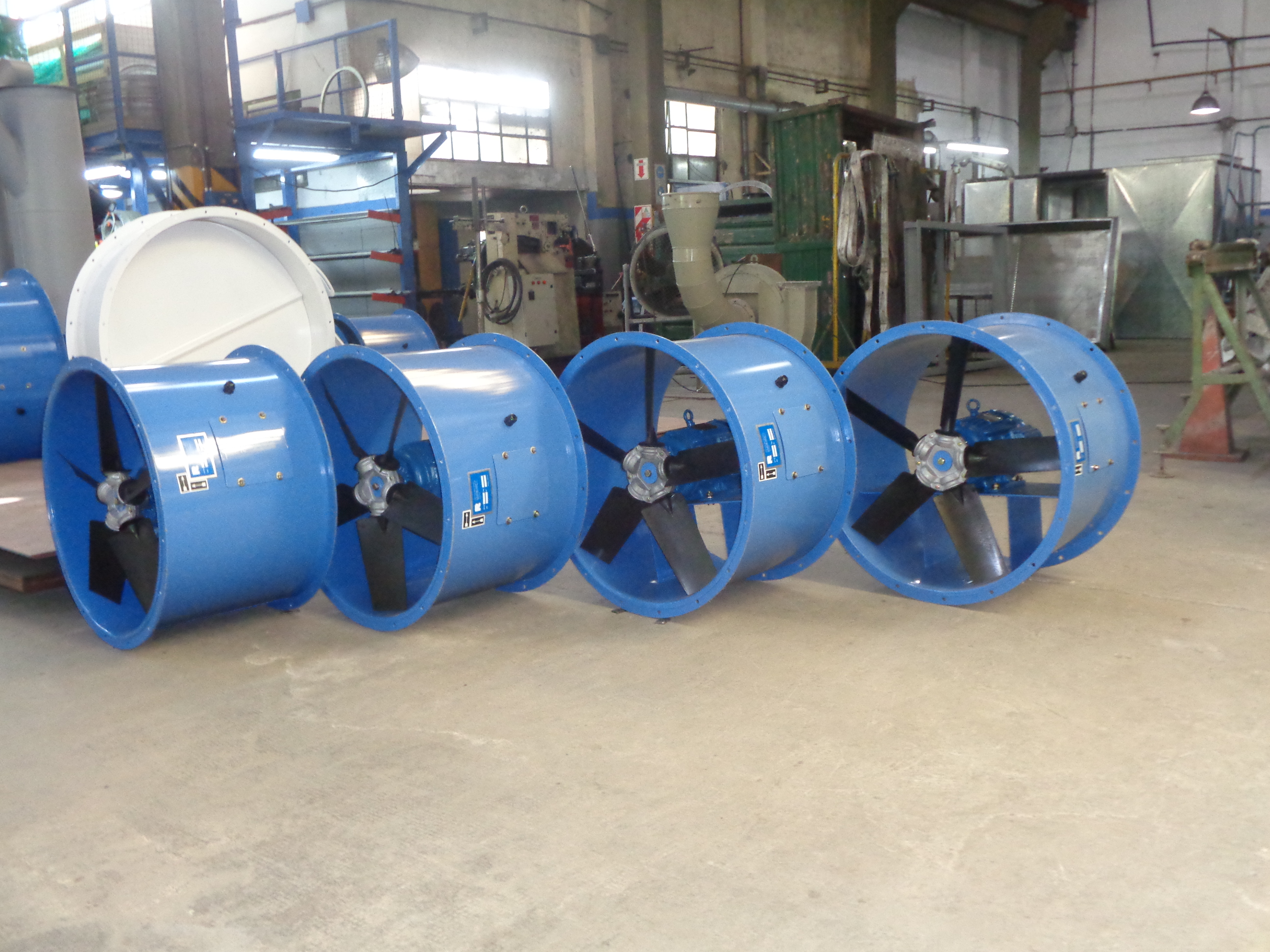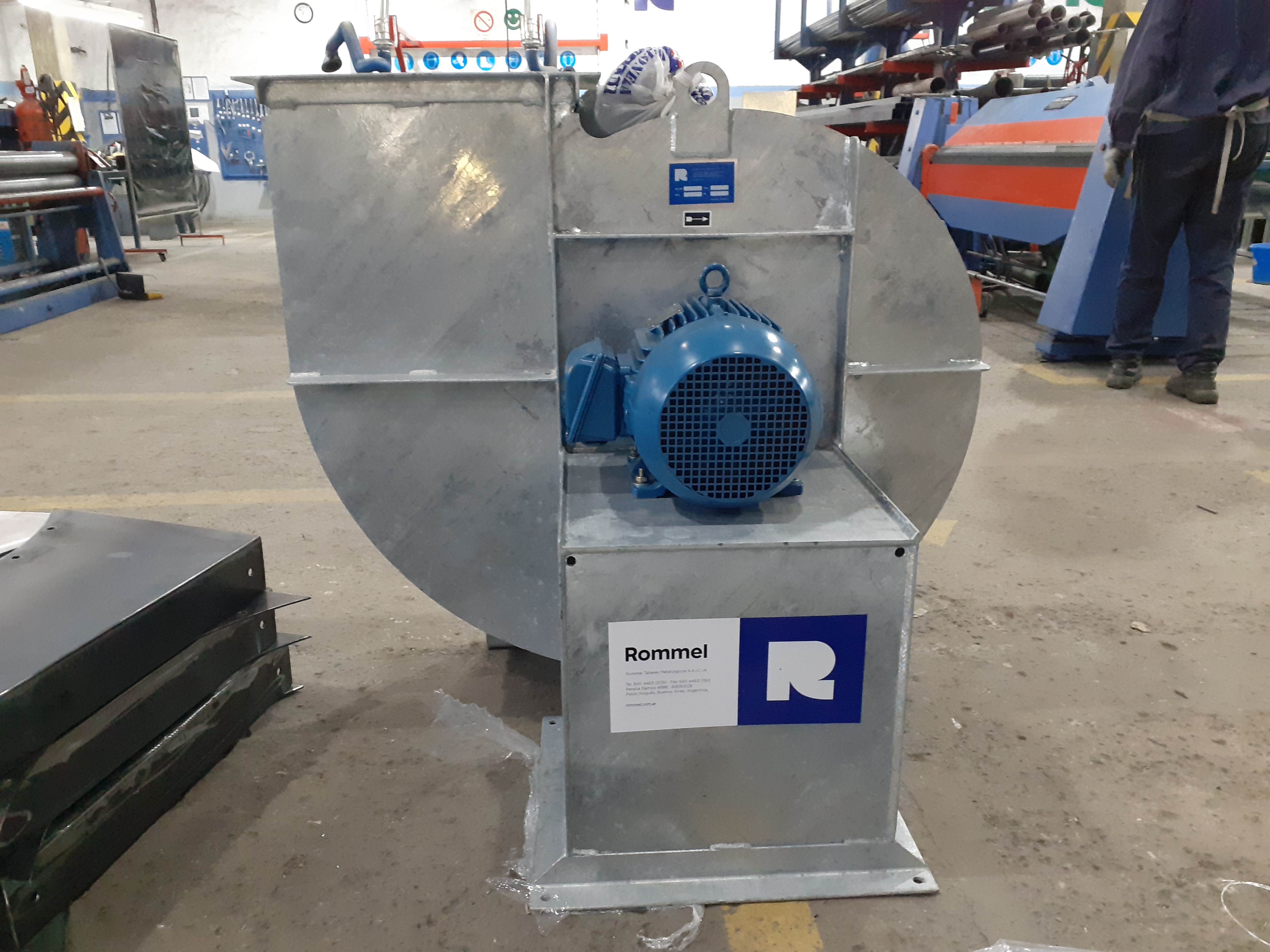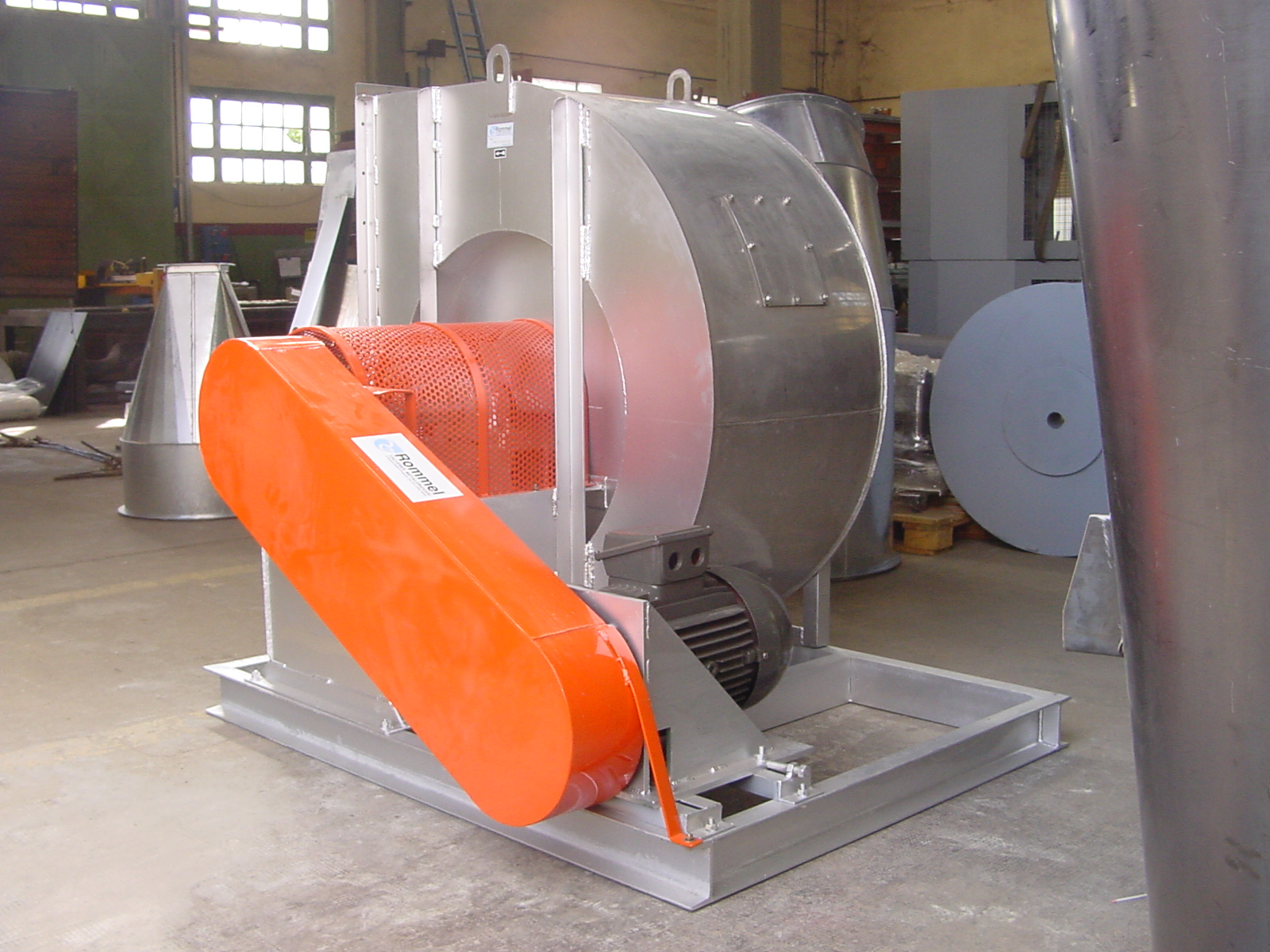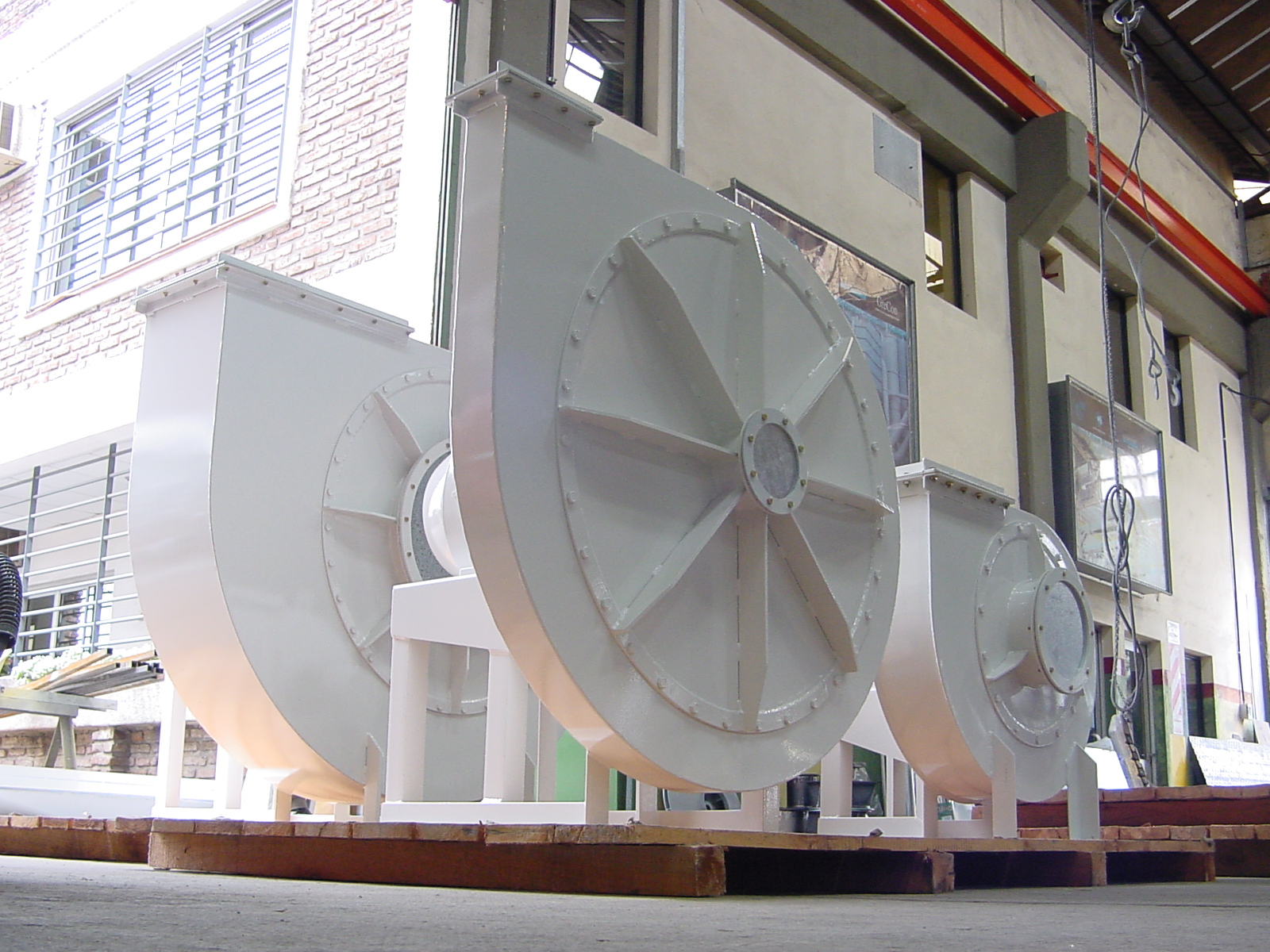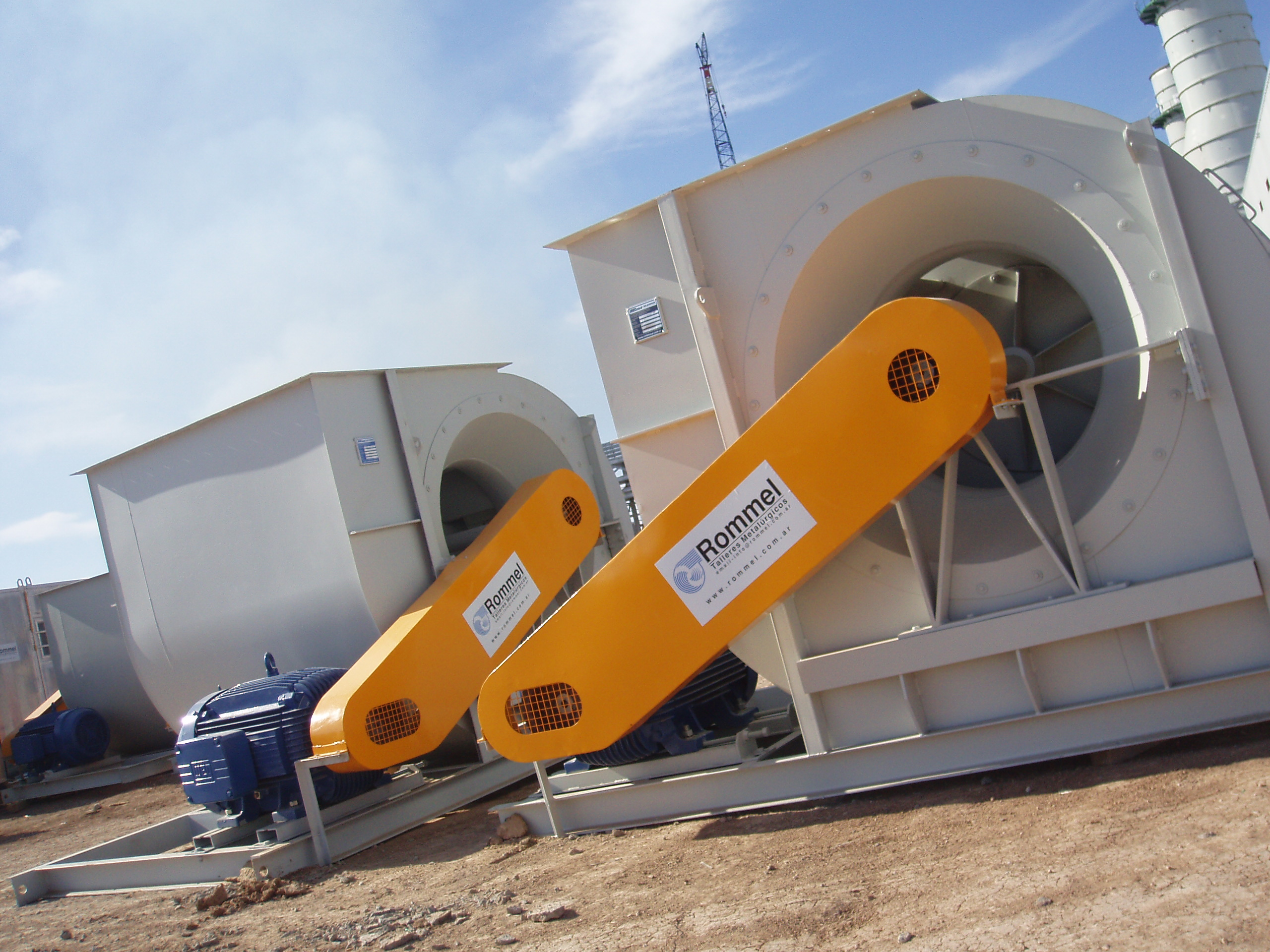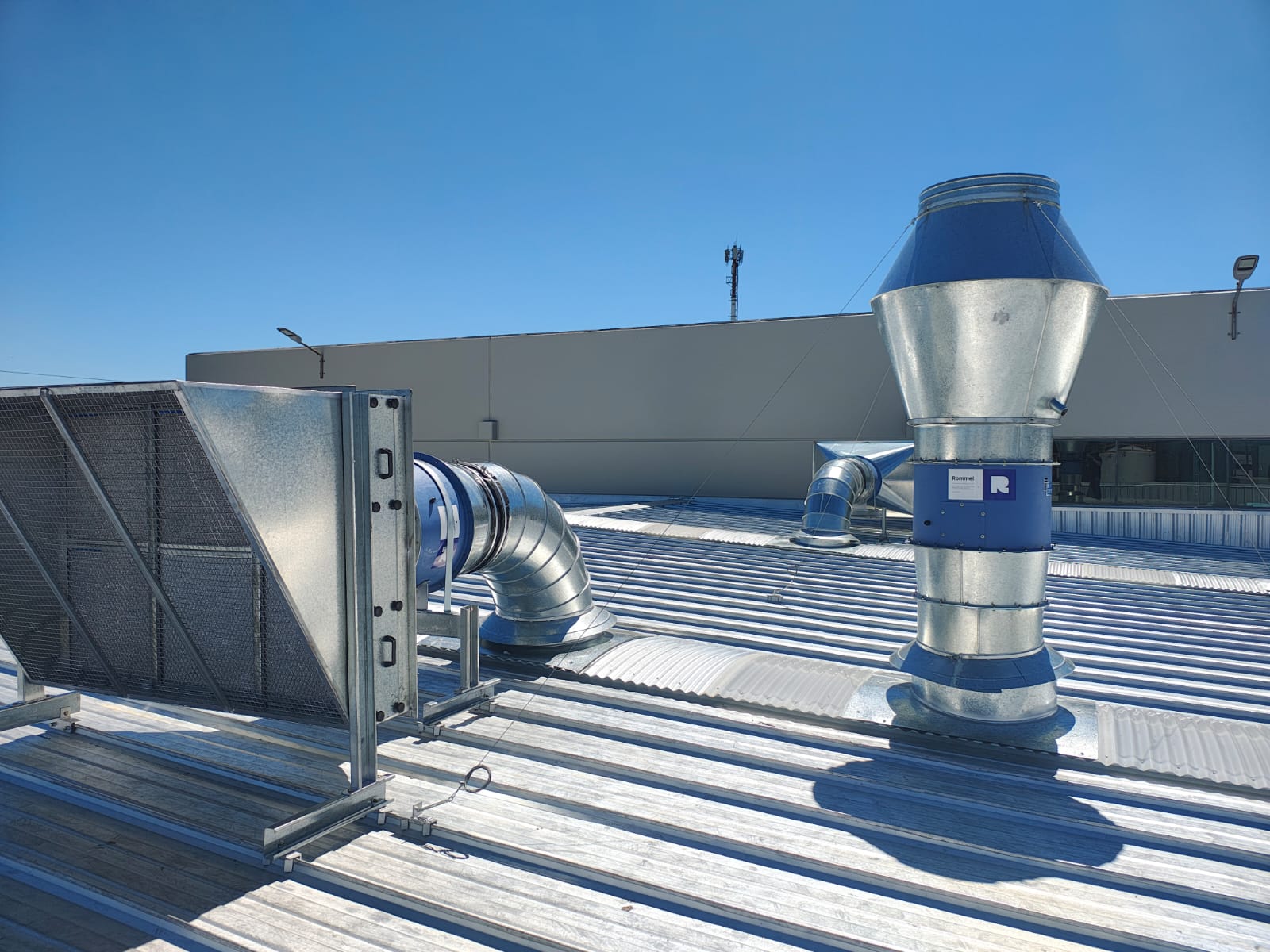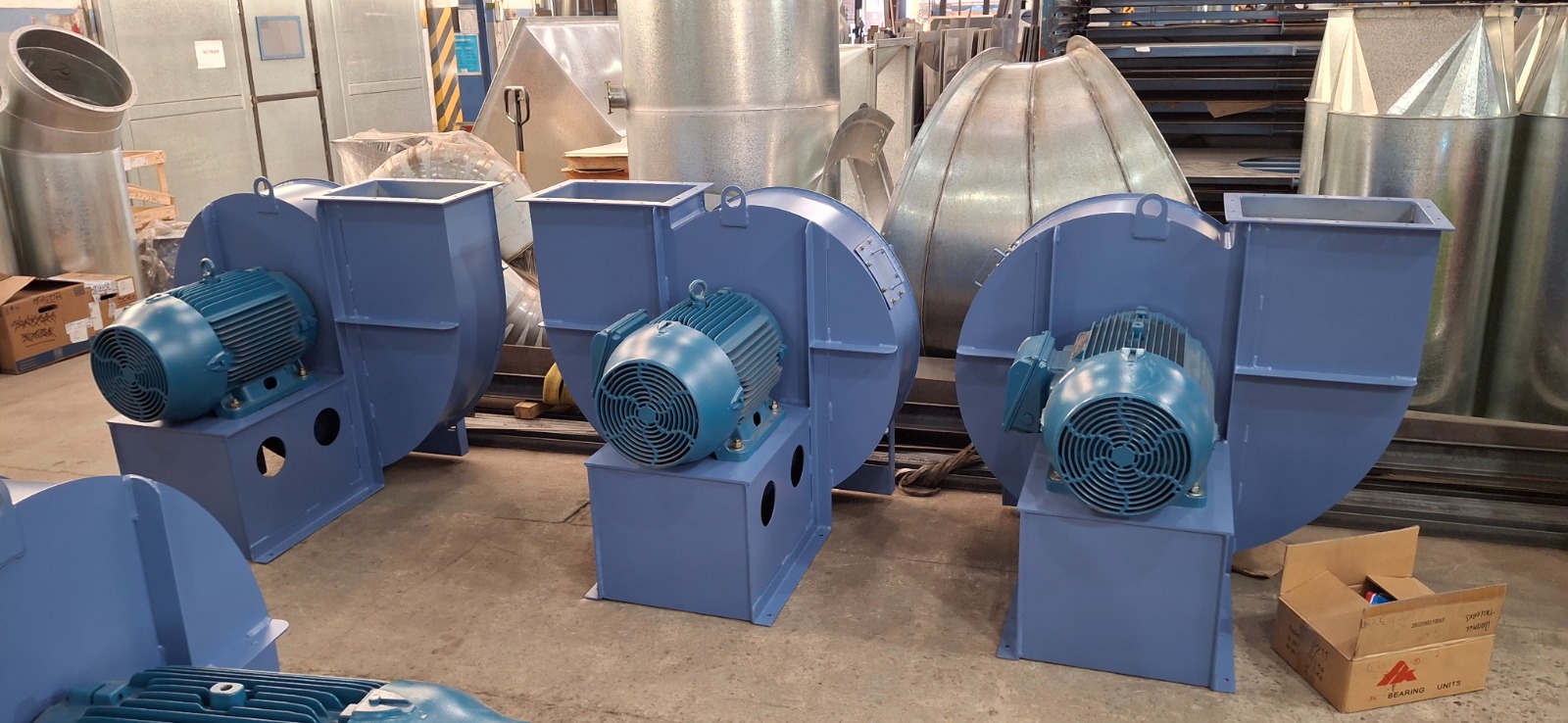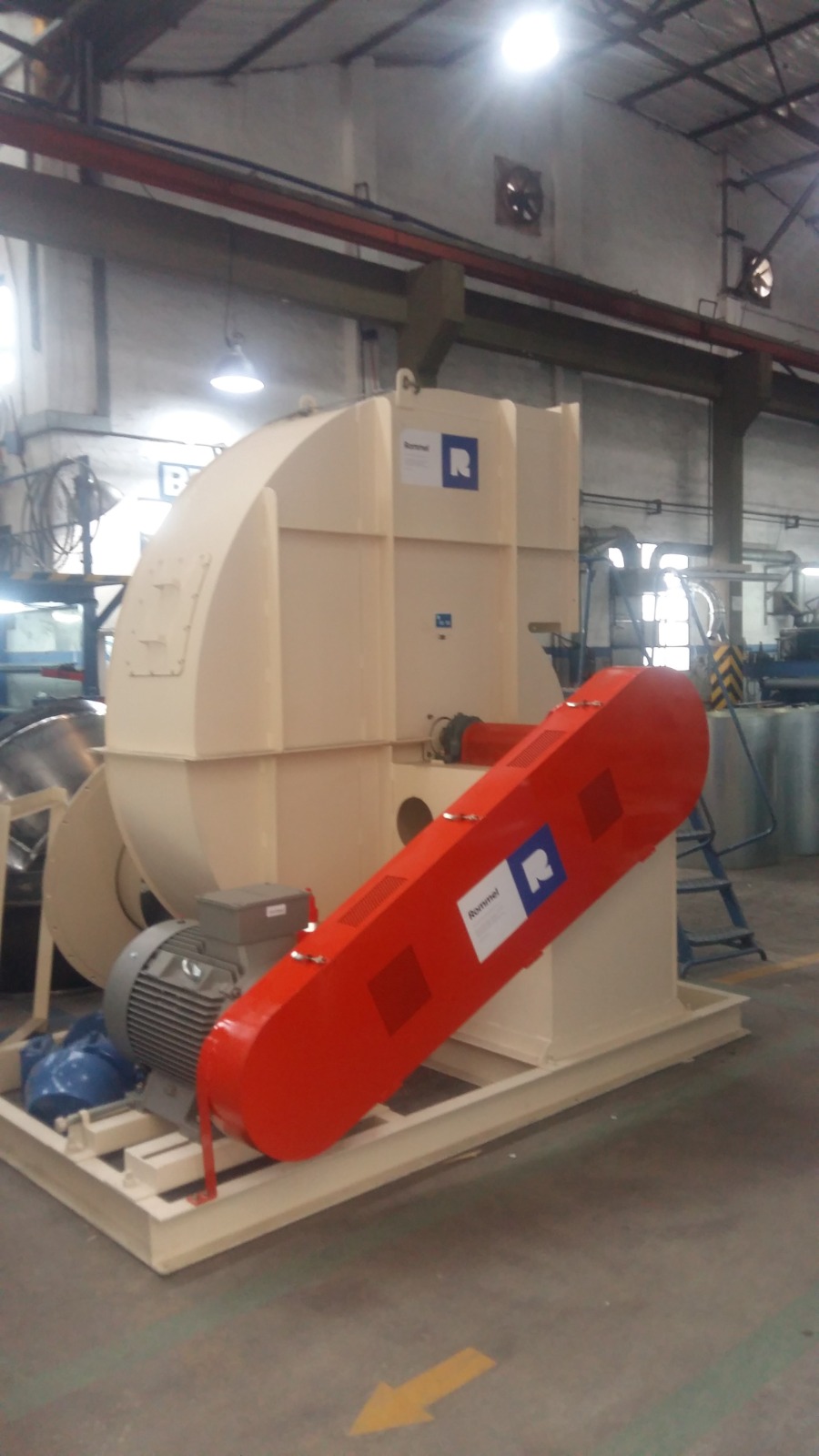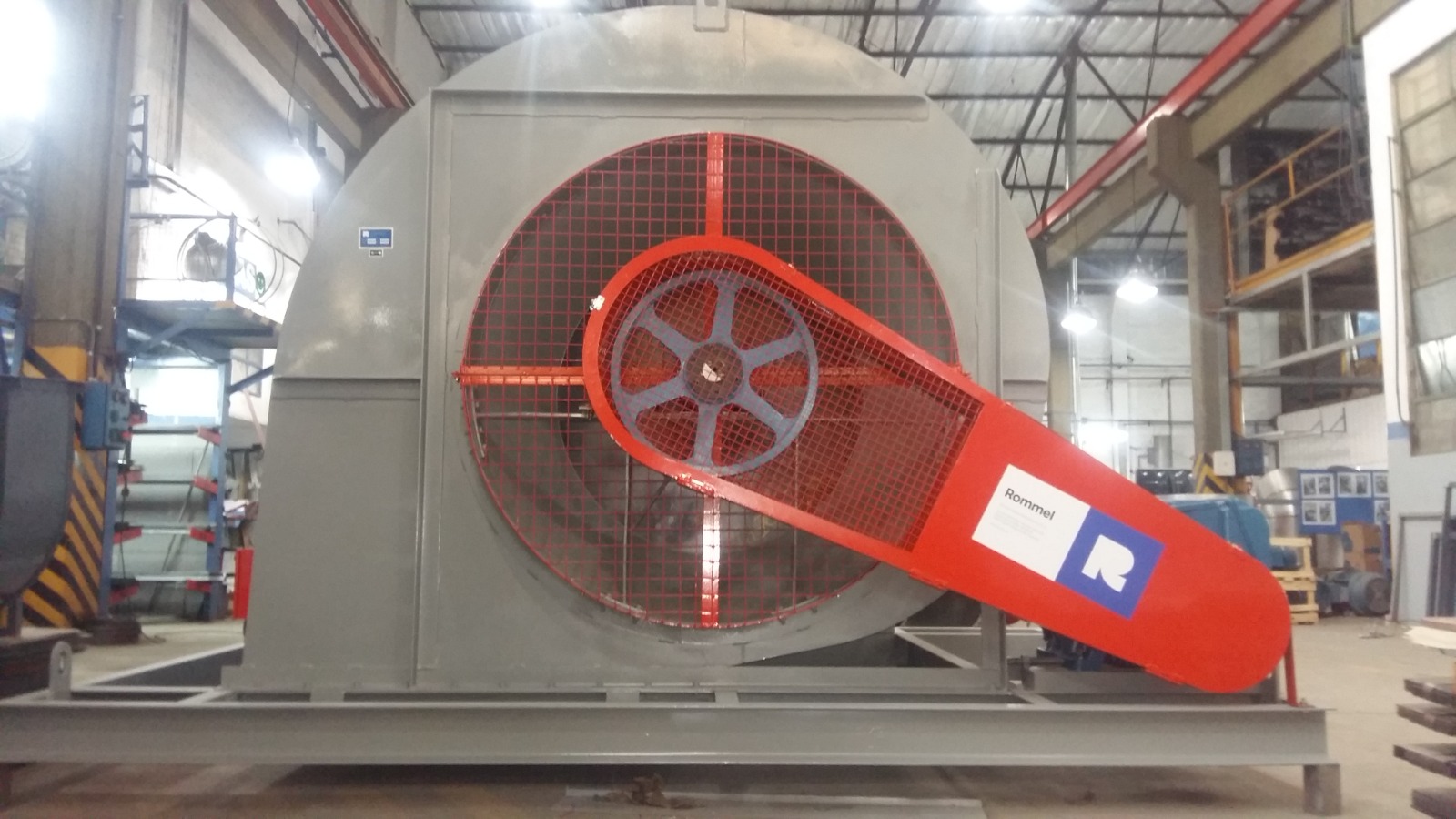
From the 1960s to the present day, Rommel has built more than 10,000 fans for all kinds of industries, for clean or exhaust air, chips and fibres, as well as abrasive and explosive gases. We offer a programme of approximately 30 models of centrifugal, axial and helicoidal fans that are selected and adjusted according to each customer's operating point: airflow, pressure, temperature and fluid density. All of them are designed and manufactured at our plant in Pablo Nogués.
- Centrifugal fans: airflows of up to 400,000 m³/h and pressures of up to 20,000 Pa.
- Axial fans: airflows of up to 800,000 m³/h and pressures of up to 750 Pa.
- Helicoidal fans: airflows of up to 25,000 m³/h and pressures of up to 125 Pa.
- Own series: OM, XW, TL and AX, among others, with different performance curves for each application.
- Construction: rotor directly coupled to the motor shaft (construction No. 4) or other arrangements according to the requirement.
- Materials: carbon steel, AISI 304 stainless steel, aluminium rotors and polyamide blades on axial fans.
- Equipment: inlet and outlet connections with flange and counter-flange, inspection door, drain nipple and base with anti-vibration mounts.
- Options: integral acoustic enclosures, frequency inverter and finish with AA2.5 sandblasting and epoxy paint.
- Motors: standardised according to IRAM 2192, with efficiencies from IE1 to IE4 and protection degrees from IP44 to IP55.
- Custom design of the operating point, with selection by efficiency to reduce energy consumption.
- Domestic manufacturing: short delivery times and availability of spare parts.
- Suitable for air with dust, fibres, vapours, high temperatures and corrosive or explosive gases.
- Robust construction and simple maintenance thanks to inspection doors and flanged connections.
- After-sales service: repair and manufacture of replacement parts, such as housings and rotors.
- Extraction of welding fumes and from laser cutting machines.
- Extraction in continuous ovens and steam tunnels of the food industry.
- Pneumatic conveying of trim, fibres and waste (paper, cardboard and textile).
- Oil recovery and blowing systems in food lines.
- Ventilation of industrial buildings, laboratories, machine rooms, offices and air handling units.
- Air intakes and extraction in paint booths.